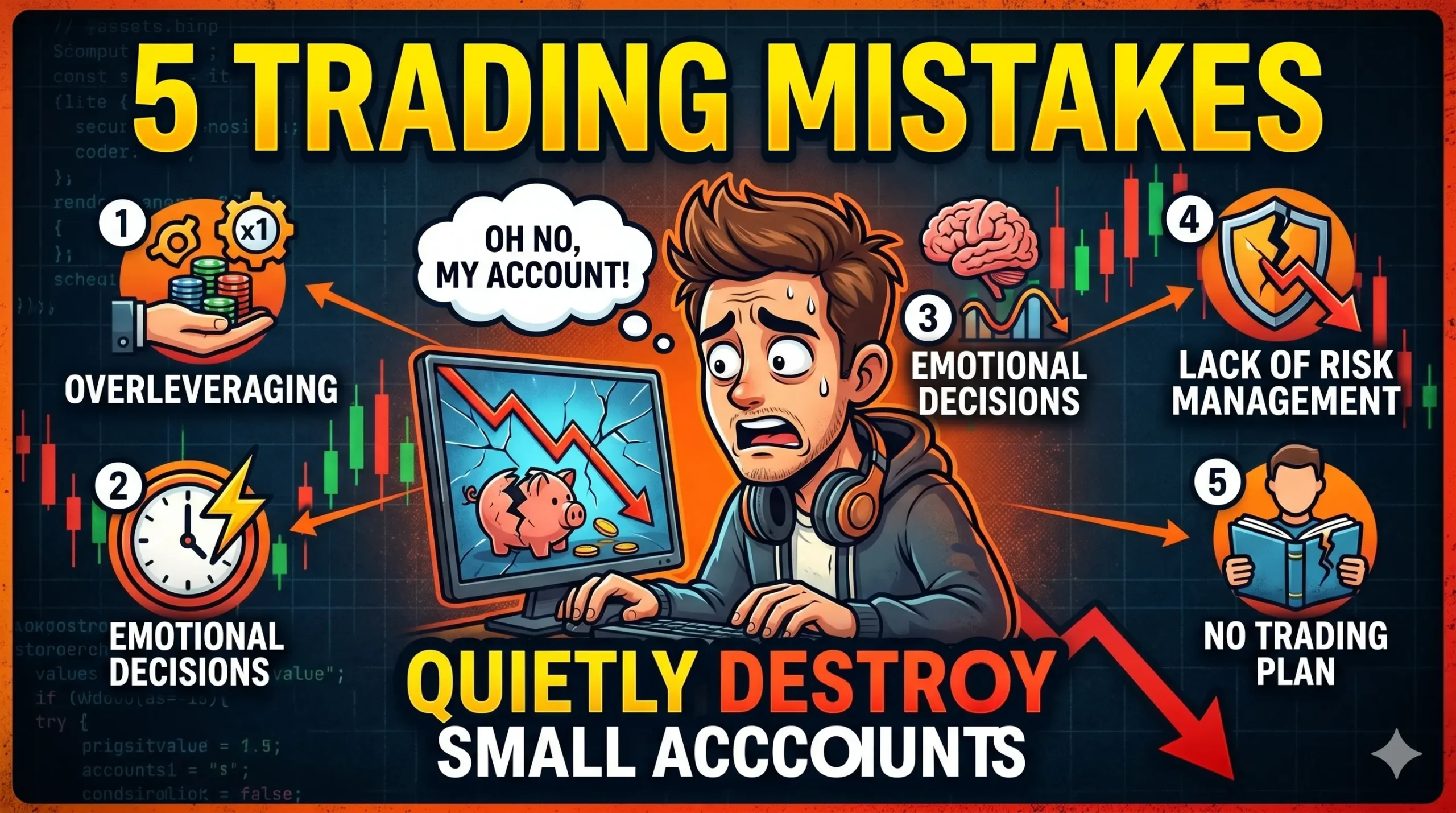
Many traders enter the financial markets with dreams of financial freedom. Some hope to leave their jobs, while others simply want an extra source of income.
Unfortunately, most beginners lose money within their first year of trading.
The problem is not always bad strategies. Often, small trading accounts are destroyed by common mistakes that slowly drain capital over time.
Understanding these mistakes is essential for anyone who wants to survive and grow in the trading world.
1. Overtrading Without a Strategy
One of the biggest mistakes beginners make is overtrading.
Many traders believe they must constantly enter positions to make money. As a result, they:
- Trade impulsively
- Take low-quality setups
- Ignore market conditions
Professional traders understand that quality matters more than quantity.
Sometimes waiting for the right opportunity is far more profitable than forcing trades every day.
2. Using Excessive Leverage
Leverage allows traders to control larger positions with smaller amounts of money.
While leverage can increase profits, it can also magnify losses dramatically.
Many beginners use high leverage hoping for quick gains. Unfortunately, even small market movements can wipe out their accounts.
Smart traders use leverage carefully and understand the risks involved.
Protecting capital always comes first.
3. Ignoring Stop Losses
Some traders refuse to use stop losses because they hope losing trades will recover.
This can become extremely dangerous.
Without stop losses:
- Losses can grow rapidly
- Emotions take over
- Accounts can collapse quickly
Successful traders accept small losses early instead of allowing them to become massive problems later.
A stop loss is not a weakness — it is protection.
4. Revenge Trading After Losses
Losing trades are emotionally painful.
After a loss, many traders immediately try to recover their money by taking aggressive trades. This behavior is known as revenge trading.
Revenge trading often leads to:
- Emotional decisions
- Larger losses
- Poor judgment
- Broken discipline
Professional traders understand that losses are part of the business.
Instead of reacting emotionally, they review mistakes calmly and wait for better opportunities.
5. Risking Too Much on One Trade
Some traders risk huge portions of their accounts on single trades hoping for massive profits.
This is extremely dangerous because even one bad trade can destroy months of progress.
Most experienced traders risk only a small percentage of their capital per trade.
Small consistent gains are far more sustainable than gambling large amounts.
Why Trading Psychology Matters
Trading is not just about charts and indicators.
Psychology plays a massive role in:
- Decision-making
- Discipline
- Patience
- Emotional control
Even profitable strategies can fail if traders cannot control emotions properly.
Learning psychological discipline is often harder than learning technical analysis.
Building Better Trading Habits
Successful traders focus on long-term survival.
Some helpful habits include:
- Following a written trading plan
- Managing risk carefully
- Reviewing mistakes regularly
- Staying patient
- Avoiding emotional trading
Consistency matters more than occasional big wins.
The Importance of Education
Many beginners start trading without proper education.
They rely on:
- Random social media advice
- Fake trading gurus
- Unrealistic profit promises
Real trading success requires continuous learning and experience.
Understanding risk management, market structure, and psychology is essential for long-term growth.
Conclusion
Small trading accounts are usually destroyed slowly through repeated mistakes rather than one single disaster.
Overtrading, excessive leverage, ignoring stop losses, revenge trading, and poor risk management are some of the most common reasons traders fail.
The good news is that these mistakes can be avoided through discipline, patience, and proper education.
Trading success is not about getting rich quickly. It is about surviving long enough to develop skill, consistency, and emotional control over time.